Brawl Stars (Android/iOS): Updated Balance, Modes and Progression in 2026
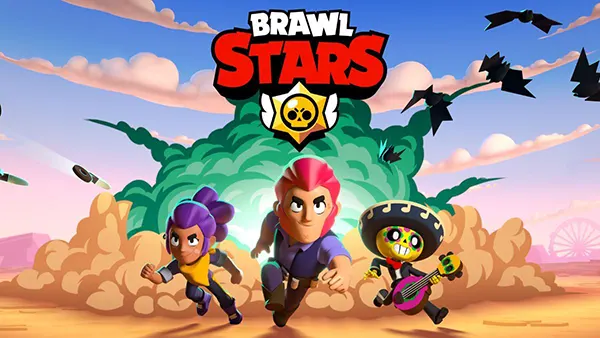
In 2026, Brawl Stars remains one of the most actively supported competitive mobile titles on Android and iOS. Supercell has continued refining balance, expanding seasonal content, and adjusting progression to make it more transparent and less dependent on pure grind. The current version reflects several years of structural changes: reworked power scaling, deeper build customisation through Gadgets and Star Powers, and a clearer reward track via Brawl Pass. Below is a detailed breakdown of how balance, modes and progression function this year, based on the live state of the game.
Balance Changes and Meta Shifts in 2026
Throughout 2025 and early 2026, Supercell maintained a consistent balance update cycle, typically aligning major adjustments with new seasons. Instead of dramatic overhauls, the developers have focused on targeted stat tuning: minor health tweaks, Super charge rate adjustments, and damage scaling refinements. This approach has reduced extreme power spikes and shortened the lifespan of oppressive meta picks.
Hypercharge, introduced earlier and now standard for a growing portion of the roster, continues to define high-level play. In 2026, its activation windows and stat boosts have been recalibrated to prevent snowballing in objective-based modes. Hypercharge remains impactful, but coordinated team play and timing matter more than raw activation frequency.
Another important shift concerns map pools and mode rotations. By adjusting which Brawlers thrive on certain map geometries, Supercell indirectly balances the meta without constant direct nerfs. As a result, tier lists fluctuate more due to environment and composition synergy rather than a single overpowered character dominating across all modes.
Competitive Viability and Team Composition
Power League, now fully integrated into ranked progression with clearer seasonal rewards, has become the primary indicator of competitive balance. Draft strategy plays a larger role in 2026 because the roster has expanded significantly, and counter-picks are more meaningful than ever. High-tier matches are decided less by mechanical burst and more by coordinated ability cycling.
Support and control Brawlers have regained value due to balance updates that slightly reduced burst damage across several assassins. This encourages structured team compositions: a front-line engager, a mid-range controller and a backline damage dealer or support. Such balance makes ranked matches less chaotic and more tactical.
Importantly, no single class consistently outperforms others across all competitive tiers. While some Brawlers remain situationally strong, the overall 2026 meta is broader than in earlier years, with viable picks spanning multiple archetypes.
Game Modes: Rotation, Innovation and Stability
Classic modes such as Gem Grab, Brawl Ball, Heist and Knockout remain core pillars of the game. Their rule sets are largely unchanged, but subtle map reworks and layout updates keep them strategically fresh. Supercell has focused on map readability and spawn fairness to reduce frustration in tight matches.
Limited-time modes continue to appear on seasonal rotation. Some return from previous years with adjusted mechanics, while others introduce experimental objectives. However, unlike earlier experimental phases, 2026 modes are more polished at launch, reflecting a more measured design philosophy.
Club League, now streamlined compared to its initial iteration, ties more directly into progression rewards. Clubs that coordinate participation gain access to enhanced resource payouts, encouraging long-term engagement rather than sporadic activity.
Event Design and Player Retention
Seasonal events in 2026 are structured around clear milestone systems. Instead of randomised event tracks, players complete defined objectives to unlock cosmetic rewards, credits and upgrade materials. This reduces uncertainty and makes progress predictable.
Special challenge events still offer high-skill brackets with limited losses. These challenges reward strong performance but are no longer the only source of exclusive cosmetics. Supercell has shifted toward broader accessibility while keeping prestige rewards for flawless runs.
Map Maker remains active, though curated selections are prioritised. Community maps that meet balance and engagement criteria rotate into official playlists, creating a pipeline between player creativity and the core competitive ecosystem.
Progression System and Economy in 2026
The progression system has stabilised around Credits, Coins and Power Points. Credits unlock new Brawlers through the Starr Road, which continues to replace loot box-style randomness. Players can now preview upcoming unlock paths more clearly, making long-term planning easier.
Brawl Pass remains central to seasonal progression. The free and premium tracks provide structured rewards, including Bling for cosmetics, upgrade resources and exclusive skins. In 2026, reward distribution is more evenly spaced, reducing long inactive stretches between meaningful unlocks.
Gears, Gadgets and Star Powers are now fully integrated into mid-to-late progression. Their acquisition is more controlled than in the past, with fewer random drops and more direct purchasing options. This system supports build customisation without excessive grind.
Monetisation, Fairness and Long-Term Growth
Microtransactions in 2026 primarily revolve around cosmetics and Brawl Pass upgrades. While instant progression purchases exist, the competitive ceiling is not locked behind paywalls. Fully free-to-play players can reach maximum power levels through consistent seasonal participation.
The removal of blind box mechanics several years ago continues to define the economy’s transparency. Players understand exactly what resource they are earning and how it contributes to unlocking or upgrading a Brawler.
Overall, progression feels more linear and less dependent on chance compared to early versions of the game. The 2026 structure rewards steady engagement and skill improvement rather than random drops, aligning Brawl Stars more closely with modern live-service standards on mobile.